✨ New Arrivals Just Dropped!Explore
FORT UMPQUA
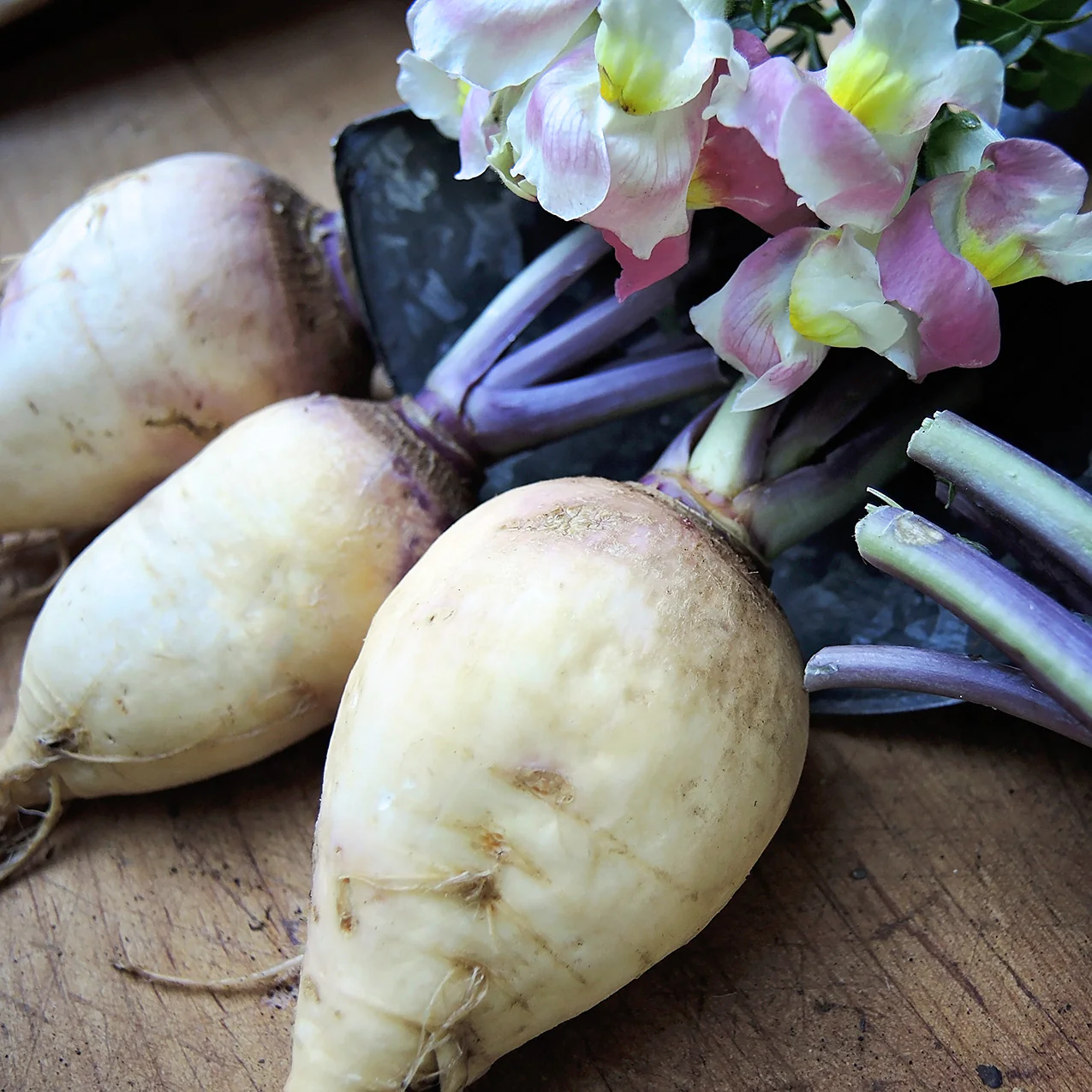
55–60 days. A striking turnip that showcases a vibrant purple on top and firm, white, 3–4 inch roots. Experience a delightful sweetness at first bite, followed by a warm spice that lingers just enough to make you want to come back for more. Their rich taste will elevate any meal—perfect for roasting, adding to soups, or enjoying fresh in salads!
We believe it’s plausible, and perhaps probable that this pioneer turnip has been dutifully reproducing itself for over 170 years! Fort Umpqua was a trading post built by the Hudson Bay Company in 1836. The location for the fort was chosen in part for its ability to grow vegetables and fruits. With the 80 acres of deep river loam soil the fort was situated on, it was perfect for growing food.
In 2010, one of Territorial’s previous owners, Tom Johns, had a chance encounter with Al Lepage, a historian with avid interest in the workings of the Hudson Bay Company. He told Tom of a meeting he had with a couple, Rhonda and Rudy, who currently own the site where Fort Umpqua was located. He was telling them about the gardens that each fort had, and how important turnips were to settlers and trappers of the day. Rich in vitamin C, they could be stored or placed in saddle bags and taken on excursions. Upon hearing this Rhonda and Rudy gasped as they told Al that turnips appeared every so often on their farm, but they thought little of it. So little in fact that the last time they appeared they sprayed the area with herbicide in an attempt to remove noxious weeds. Tom called Rhonda immediately and met her and Rudy on the fort site. He asked them if they ever appeared again to contact him. Five years later, the call came in. Tom drove down immediately and found 8 very nice turnips, pretty as you please, sitting on top of the soil in the tall grass growing much like a kohlrabi. He dug 6 turnips, took them back to our farm, and transplanted them in our best sandy soil. Once rehydrated, the turnips grew through our mild maritime northwest winter and set a decent amount of seed the next summer. Since that time, we have been multiplying the seed and comparing them with as many heirloom varieties as we could find from around the world. We cannot say for sure that these turnips are truly descendants from when Oregon was just a territory, but we are working to move from plausible to probable. As a limited release—we are very pleased and excited to return this one-of-a-kind turnip, with a one-of-a-kind story, back to those who love to garden!
We believe it’s plausible, and perhaps probable that this pioneer turnip has been dutifully reproducing itself for over 170 years! Fort Umpqua was a trading post built by the Hudson Bay Company in 1836. The location for the fort was chosen in part for its ability to grow vegetables and fruits. With the 80 acres of deep river loam soil the fort was situated on, it was perfect for growing food.
In 2010, one of Territorial’s previous owners, Tom Johns, had a chance encounter with Al Lepage, a historian with avid interest in the workings of the Hudson Bay Company. He told Tom of a meeting he had with a couple, Rhonda and Rudy, who currently own the site where Fort Umpqua was located. He was telling them about the gardens that each fort had, and how important turnips were to settlers and trappers of the day. Rich in vitamin C, they could be stored or placed in saddle bags and taken on excursions. Upon hearing this Rhonda and Rudy gasped as they told Al that turnips appeared every so often on their farm, but they thought little of it. So little in fact that the last time they appeared they sprayed the area with herbicide in an attempt to remove noxious weeds. Tom called Rhonda immediately and met her and Rudy on the fort site. He asked them if they ever appeared again to contact him. Five years later, the call came in. Tom drove down immediately and found 8 very nice turnips, pretty as you please, sitting on top of the soil in the tall grass growing much like a kohlrabi. He dug 6 turnips, took them back to our farm, and transplanted them in our best sandy soil. Once rehydrated, the turnips grew through our mild maritime northwest winter and set a decent amount of seed the next summer. Since that time, we have been multiplying the seed and comparing them with as many heirloom varieties as we could find from around the world. We cannot say for sure that these turnips are truly descendants from when Oregon was just a territory, but we are working to move from plausible to probable. As a limited release—we are very pleased and excited to return this one-of-a-kind turnip, with a one-of-a-kind story, back to those who love to garden!
Select Type
Select Size
From $1.49
Original: $4.95
-70%FORT UMPQUA—
$4.95
$1.49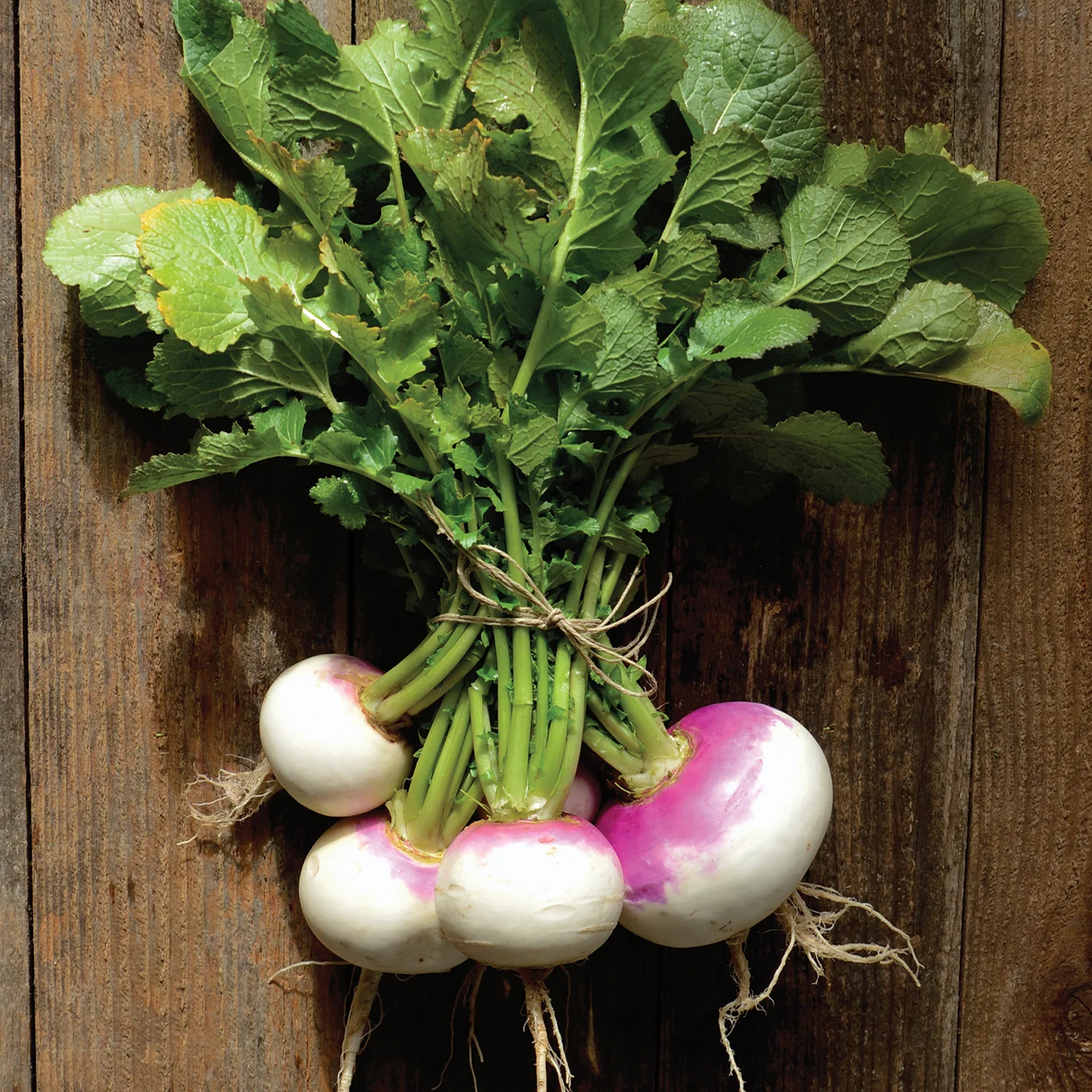
Description
55–60 days. A striking turnip that showcases a vibrant purple on top and firm, white, 3–4 inch roots. Experience a delightful sweetness at first bite, followed by a warm spice that lingers just enough to make you want to come back for more. Their rich taste will elevate any meal—perfect for roasting, adding to soups, or enjoying fresh in salads!
We believe it’s plausible, and perhaps probable that this pioneer turnip has been dutifully reproducing itself for over 170 years! Fort Umpqua was a trading post built by the Hudson Bay Company in 1836. The location for the fort was chosen in part for its ability to grow vegetables and fruits. With the 80 acres of deep river loam soil the fort was situated on, it was perfect for growing food.
In 2010, one of Territorial’s previous owners, Tom Johns, had a chance encounter with Al Lepage, a historian with avid interest in the workings of the Hudson Bay Company. He told Tom of a meeting he had with a couple, Rhonda and Rudy, who currently own the site where Fort Umpqua was located. He was telling them about the gardens that each fort had, and how important turnips were to settlers and trappers of the day. Rich in vitamin C, they could be stored or placed in saddle bags and taken on excursions. Upon hearing this Rhonda and Rudy gasped as they told Al that turnips appeared every so often on their farm, but they thought little of it. So little in fact that the last time they appeared they sprayed the area with herbicide in an attempt to remove noxious weeds. Tom called Rhonda immediately and met her and Rudy on the fort site. He asked them if they ever appeared again to contact him. Five years later, the call came in. Tom drove down immediately and found 8 very nice turnips, pretty as you please, sitting on top of the soil in the tall grass growing much like a kohlrabi. He dug 6 turnips, took them back to our farm, and transplanted them in our best sandy soil. Once rehydrated, the turnips grew through our mild maritime northwest winter and set a decent amount of seed the next summer. Since that time, we have been multiplying the seed and comparing them with as many heirloom varieties as we could find from around the world. We cannot say for sure that these turnips are truly descendants from when Oregon was just a territory, but we are working to move from plausible to probable. As a limited release—we are very pleased and excited to return this one-of-a-kind turnip, with a one-of-a-kind story, back to those who love to garden!
We believe it’s plausible, and perhaps probable that this pioneer turnip has been dutifully reproducing itself for over 170 years! Fort Umpqua was a trading post built by the Hudson Bay Company in 1836. The location for the fort was chosen in part for its ability to grow vegetables and fruits. With the 80 acres of deep river loam soil the fort was situated on, it was perfect for growing food.
In 2010, one of Territorial’s previous owners, Tom Johns, had a chance encounter with Al Lepage, a historian with avid interest in the workings of the Hudson Bay Company. He told Tom of a meeting he had with a couple, Rhonda and Rudy, who currently own the site where Fort Umpqua was located. He was telling them about the gardens that each fort had, and how important turnips were to settlers and trappers of the day. Rich in vitamin C, they could be stored or placed in saddle bags and taken on excursions. Upon hearing this Rhonda and Rudy gasped as they told Al that turnips appeared every so often on their farm, but they thought little of it. So little in fact that the last time they appeared they sprayed the area with herbicide in an attempt to remove noxious weeds. Tom called Rhonda immediately and met her and Rudy on the fort site. He asked them if they ever appeared again to contact him. Five years later, the call came in. Tom drove down immediately and found 8 very nice turnips, pretty as you please, sitting on top of the soil in the tall grass growing much like a kohlrabi. He dug 6 turnips, took them back to our farm, and transplanted them in our best sandy soil. Once rehydrated, the turnips grew through our mild maritime northwest winter and set a decent amount of seed the next summer. Since that time, we have been multiplying the seed and comparing them with as many heirloom varieties as we could find from around the world. We cannot say for sure that these turnips are truly descendants from when Oregon was just a territory, but we are working to move from plausible to probable. As a limited release—we are very pleased and excited to return this one-of-a-kind turnip, with a one-of-a-kind story, back to those who love to garden!